Body Hair Transplantation (BHT): An Option When Scalp Donor Hair Runs Short

Every hair transplant is limited by one number: how many follicles the donor area can safely spare. For most patients with typical pattern hair loss, the permanent zone at the back and sides of the scalp supplies more than enough. For patients with advanced loss, or those who have already had prior transplants, that math stops working. The recipient area needs more grafts than the scalp can give.
Body hair transplantation exists for exactly that situation.
What Is BHT?
Body Hair Transplantation is a procedure designed for individuals suffering from severe hair loss, where conventional scalp donor areas fail to provide sufficient grafts. Rather than restricting harvesting to the scalp, BHT draws follicles from other parts of the body, most commonly the beard, chest, and abdomen, and transplants them to the scalp.
The extraction method is not new. BHT uses the same follicular unit extraction technique used in a standard FUE procedure, removing individual follicles one at a time. What changes is the donor pool, not the technology.
Why the Donor Supply Is the Real Constraint
This is the part patients are rarely told plainly. Hair restoration does not create new hair. It relocates existing hair. A transplant is a redistribution of a fixed and finite resource, which is why a careful surgeon spends so much time counting before cutting.
Harvest too aggressively from the scalp and the donor area itself begins to look thin, which trades one visible problem for another. BHT expands the available supply, but it does not make it unlimited. It should be understood as a way to extend the budget, not to ignore it.
How Body Hair Differs From Scalp Hair
Body hair and scalp hair are not interchangeable, and understanding the differences is essential to a realistic expectation:
- Growth cycle. Body hair has a shorter growth phase, so transplanted body hair typically will not grow as long as scalp hair.
- Texture and caliber. Beard hair tends to be coarser, while chest hair is often finer. Each behaves differently once relocated.
- Curl. Body hair frequently has a different curl pattern than scalp hair.
- Yield. Survival rates for body hair grafts are generally less predictable than for scalp grafts.
These differences are why BHT is often used strategically rather than uniformly. Beard hair, for instance, can add density and weight well in certain zones, while finer scalp grafts are typically reserved for the hairline, where a natural transition matters most.
Who Is a Candidate for BHT?
BHT is best suited to individuals with extensive hair loss and limited scalp donor hair. In practice, that usually means one of the following:
- Advanced pattern loss where the recipient area exceeds what the scalp can supply
- Patients who have had previous transplants and have a depleted scalp donor zone
- Scarring from prior procedures, including strip-scar camouflage
- Patients with genuinely dense beard or chest hair, which is what makes the approach viable
Candidacy depends heavily on your body hair density and characteristics. Not everyone with advanced loss is a good BHT candidate, and an honest evaluation is what determines that.
What the Procedure Involves
BHT is performed under local anesthesia and typically takes four to eight hours depending on graft count. Recovery generally takes 7 to 14 days, with most patients resuming normal activities within a week. As with any transplant, the transplanted hairs shed before regrowing, and most patients see significant improvement in growth and density at 6 to 12 months. Full maturity of the result takes longer still. This is a procedure that rewards patience.
Why Choose Capitis Medical & Aesthetics?
BHT is a technically demanding procedure, and it is not one to hand to an inexperienced operator. Extracting viable follicles from the beard or torso requires different angles, depths, and judgment than scalp extraction, and deciding which grafts go where is a planning problem as much as a surgical one.
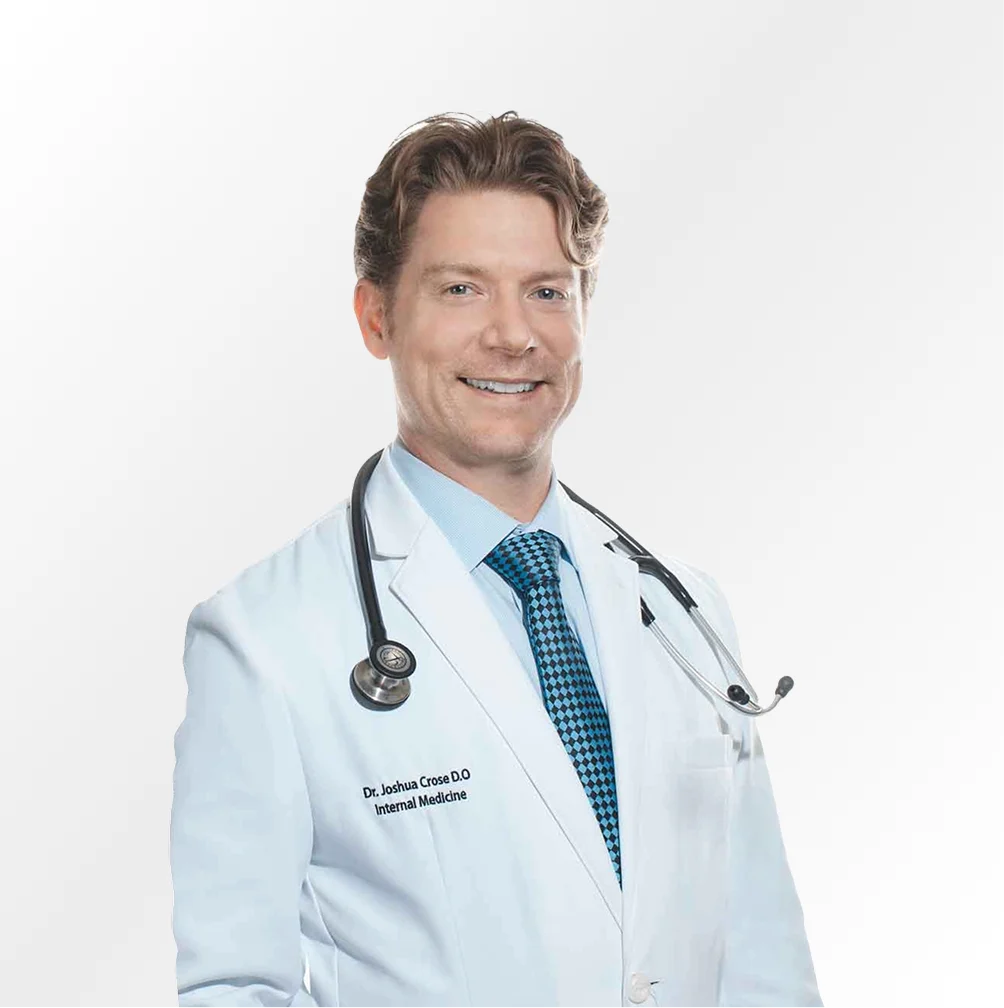
Dr. Joshua Crose is an osteopathic physician, board-certified in internal medicine, and an Associate Member of the International Society of Hair Restoration Surgery (ISHRS) who trains regularly with leading physicians in aesthetic medicine. We also offer the full range of techniques, including FUE, FUT, and DHI, which matters because it means our recommendation is not constrained by the single method we happen to perform.
We will also tell you if BHT is not your best option. For some patients, non-surgical approaches or a more conservative surgical plan produce a better long-term outcome than exhausting every donor source at once.
Frequently Asked Questions About BHT
Will transplanted beard hair look strange on my scalp?
Placed well, it blends. Beard hair is coarser, so it is generally used for density in areas where weight helps rather than at the hairline, where finer grafts create a more natural transition.
Does removing beard or chest hair leave marks?
FUE extraction leaves tiny dot scars that are typically difficult to see, though this varies with skin type and healing.
Can BHT be combined with a scalp procedure?
Yes, and it commonly is. Many plans use scalp grafts where they matter most and body grafts to supplement coverage.
Is the hair permanent?
Transplanted follicles generally retain the characteristics of their donor site, including their growth cycle, which is why body hair typically stays shorter than surrounding scalp hair.
Find Out What Your Donor Area Can Support
The only way to know whether BHT makes sense for you is an in-person evaluation of your donor supply and your goals. Contact Capitis Medical & Aesthetics to schedule a consultation and learn more about BHT Hair Transplantation in San Diego, CA. We will give you a realistic assessment of what is achievable before you commit to anything.

